Written by Courtney Brown, Staff Attorney
Citizen suits are fundamental to our work as Waterkeepers. This legal tool allows ordinary citizens and non-profit groups to hold polluters accountable in federal court when the government fails to act. San Diego Coastkeeper initiates citizen suits when urgent, direct action is needed to protect our waterways and the people and ecosystems that depend on them. Now this essential tool is under threat.
Why Citizen Suits Exist
Before the passage of our bedrock environmental laws, pollution was so bad that rivers regularly caught fire due to unregulated dumping of industrial chemicals and untreated sewage. It took a nationwide public uprising to change course. That movement culminated in the first Earth Day on April 22, 1970, still the largest single-day public demonstration in U.S. history. In response to the public’s demands for action, Congress enacted a suite of federal environmental laws like the Clean Air Act and Clean Water Act.
However, pollution laws are only as strong as their enforcement. In California, clean water laws are implemented and enforced by the State and Regional Water Boards. Unfortunately, these agencies simply lack the resources to hold every single polluter accountable.
Anticipating that limited government resources or political will could undermine enforcement, Congress built citizen suit provisions into our environmental laws to empower individuals to step in when agencies fall short. In effect, citizen suit provisions deputize the public to enforce these laws, recognizing the public’s vested interest in things like clean water and clean air. That’s where we come in.
Private citizens have historically accounted for the vast majority of Clean Water Act enforcement cases throughout the country. In California alone, roughly 83% of industrial stormwater pollution cases brought between 2013-2017 were initiated through citizen suits, curbing pollution and generating $8.8 million for local environmental restoration and community projects. Given the shrinking capacity of state and federal regulators since then, that share is almost certainly even higher today. Too often, regulators respond to violations with little more than a warning letter, or nothing at all, which does little to incentivize compliance with clean water laws. Without citizen suits, most Clean Water Act violations would go unchecked.
Proof It Works: Citizen Suits in San Diego
Some of San Diego’s most important clean water victories started with a Coastkeeper citizen suit. From sewage spills to fireworks pollution, we’ve used this tool to step in when agencies fell short. None of these wins would have been possible without citizen enforcement. Here are a few examples:
2001: Chronic sewage spills. San Diego Coastkeeper and the Surfrider Foundation sued the City of San Diego after it discharged more than 45 million gallons of sewage into local waters during just a five-year period. This citizen suit led to a landmark settlement in 2007, requiring the City to invest over $1 billion in sewage system upgrades, which has resulted in a ten-fold reduction in the number of sewage spills in the City of San Diego.
2003: Toxic runoff into San Diego Bay. San Diego Coastkeeper, partnering with Natural Resources Defense Council, successfully sued Southwest Marine (now BAE Systems), a ship repair and maintenance facility. The facility failed to implement required measures to prevent toxins from flowing into San Diego Bay. As a result, the shipyard was required to improve their stormwater pollution prevention practices, leading to major upgrades and regulatory improvements along the bayfront.
2014: Point Loma wastewater pollution. After years of advocacy and legal action, San Diego Coastkeeper, along with our partners at CERF, Surfrider San Diego, and San Diego Bird Alliance, secured a landmark cooperative agreement with the City of San Diego to address the region’s water insecurity and ocean pollution from the Point Loma Wastewater Treatment Plant. This agreement commits the City to implement Pure Water San Diego, a multi-phase wastewater recycling project that will supply nearly half of the city’s local drinking water by 2035, simultaneously decreasing wastewater pollution and our dependence on imported water from the shrinking Colorado River.
May 2026: Fireworks in Mission Bay. San Diego Coastkeeper and CERF reached a settlement with SeaWorld San Diego related to longstanding fireworks pollution in Mission Bay. As a result, SeaWorld committed to pursuing drones as a permanent replacement for fireworks, representing a momentous step toward more sustainable forms of entertainment.
August 2026: Tijuana Sewage Crisis. San Diego Coastkeeper and CERF settled Tijuana sewage crisis litigation with IBWC and Veolia related to years of rampant Clean Water Act violations at the South Bay International Wastewater Treatment Plant. When the suit was initiated in 2023, there were hundreds of violations primarily due to years of deferred infrastructure maintenance. Since then, USIBWC has secured federal funding for a full overhaul of the plant, expanded treatment capacity resulting in a decrease of untreated flows into the U.S. by 10 million gallons per day, and has met the facility’s ocean discharge effluent limits for more than 18 consecutive months.
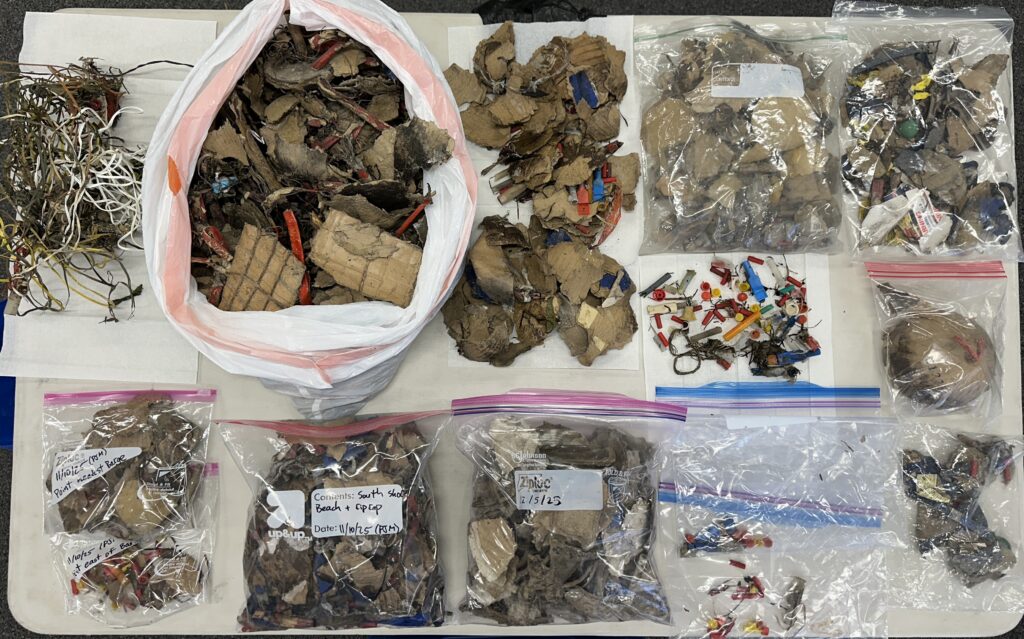
Evidence of firework debris from Mission Bay
Recent Efforts to Roll Back Progress
Citizen suits have been driving environmental protection for over 50 years, but that hasn’t stopped repeated attempts to weaken them. For example, one of the most common battles has been over the definition of “waters of the United States” (or WOTUS) – the legal term that determines which rivers, streams, wetlands, and other waterbodies are afforded coverage under the Clean Water Act. If a waterbody isn’t legally a WOTUS, it has no federal protection under the Act, no matter how polluted it gets.
One of the heaviest blows in recent history was delivered by the Supreme Court’s 2023 decision in Sackett v. EPA, which stripped millions of acres of streams and wetlands of federal protections overnight. Today, roughly half of the wetlands remaining in the U.S. fall outside the Clean Water Act’s reach. Now, the EPA and Army Corps of Engineers are threatening to narrow protections even further through a new proposed WOTUS rule, which would only cover streams that flow continuously every day of the year.
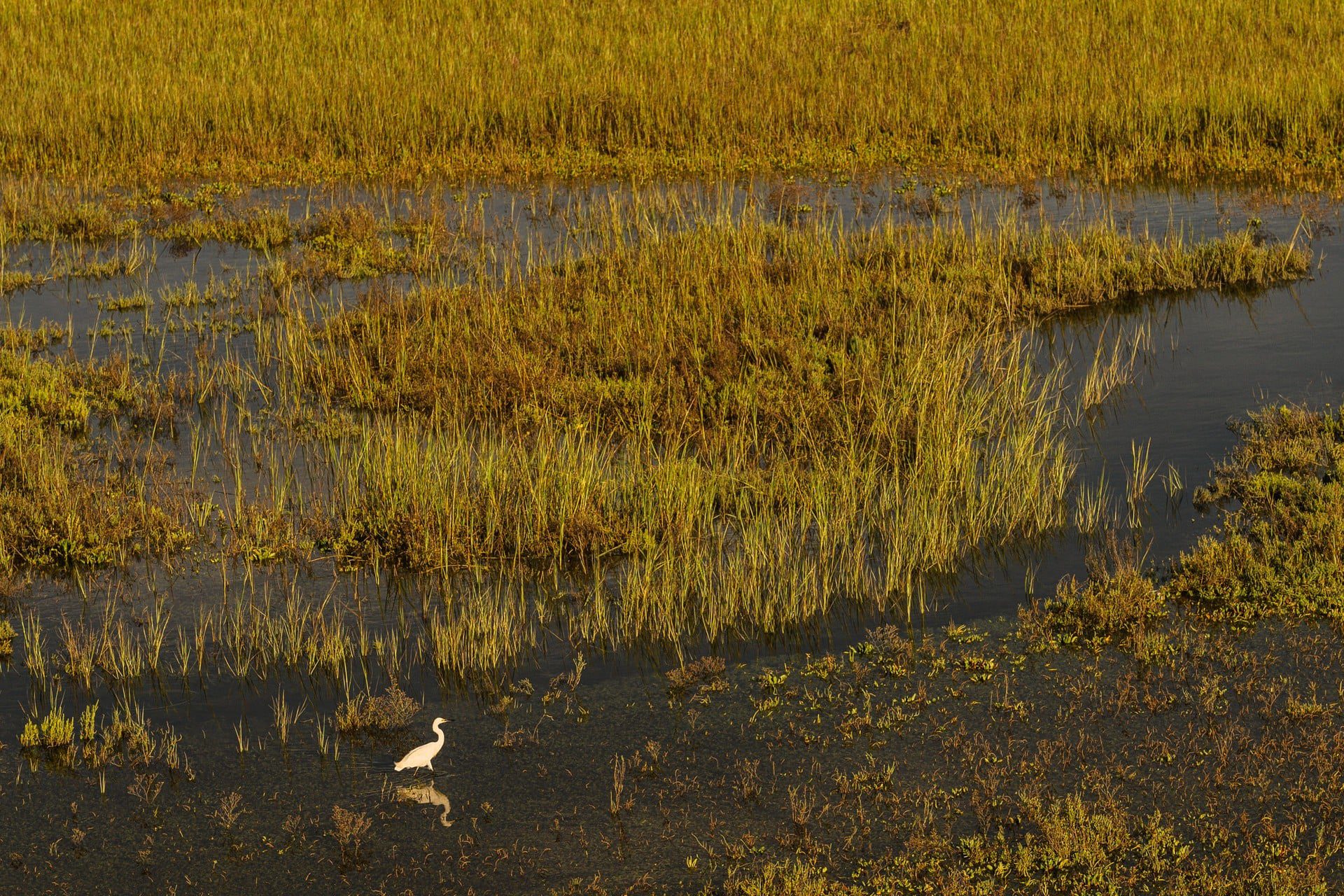
San Diego County wetlands
This would eliminate federal oversight for seasonal or ephemeral waterways that run dry during part of the year, which make up the vast majority of California’s streams and wetlands. By the government’s own mapping data, that would leave just 9 percent of California’s streams federally protected, and protected wetlands would shrink from about 1.2 million acres to roughly 81,000.
Other legal attacks are aimed directly at the citizen suit mechanism itself.
For example, the Department of Justice recently intervened in a case initiated through the Clean Air Act’s citizen suit provision, NAACP v. xAI Corp. The dispute giving rise to the lawsuit is about unpermitted gas turbines at a Memphis data center, but its outcome has the potential to go far beyond the scope of this one case. The government is asking the court to dismiss the case entirely, arguing that private citizens have no constitutional right to sue when a regulator fails to act. That right, according to DOJ, belongs exclusively to the Executive Branch. If courts adopt this reasoning, citizens could lose their power to fill in the gaps due to agency inaction, despite Congress clearly allowing for citizen enforcement.
At the same time, the Pacific Legal Foundation (the right-wing institution behind Sackett v. EPA) has been targeting other environmental citizen enforcement lawsuits throughout the country, arguing that the entire concept of citizen suits is unconstitutional. This is all happening at a moment when the federal government is pushing its deregulatory agenda more aggressively than ever.
Environmental groups, including San Diego Coastkeeper, haven’t shied away from fighting back against these attacks before, and we don’t plan to start now. Whether it’s backing legislation like SB 601, the Right to Clean Water Act, which would have granted State law protections for waterbodies that lost coverage under the Clean Water Act after Sackett; engaging in public comment processes; or strengthening grassroots coalitions, we remain dedicated to protecting our right to advocate for the environment against private interests.
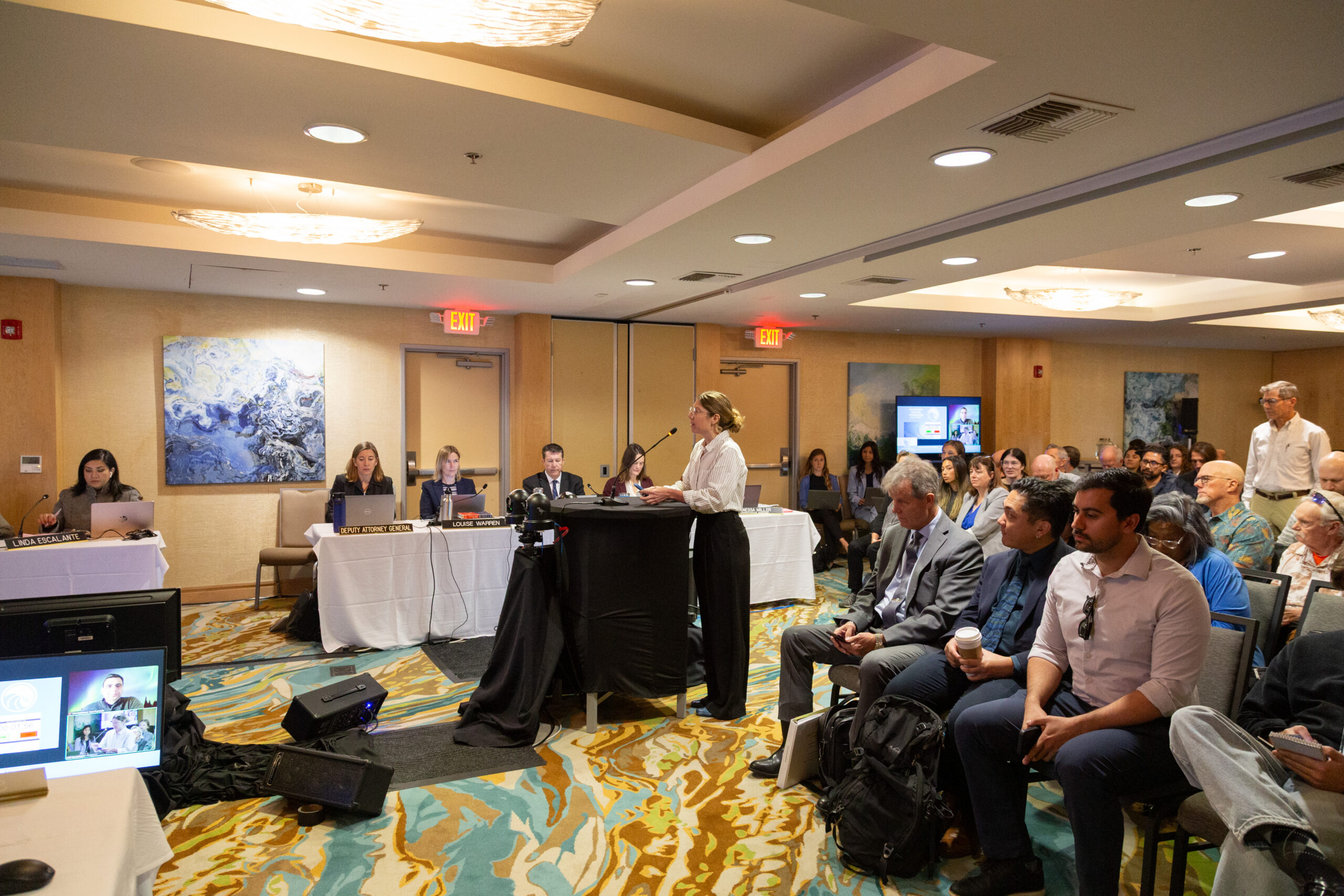
Courtney Brown, Staff Attorney at San Diego Coastkeeper, giving public comment about firework debris in Mission Bay at a California Coastal Commission Meeting
What now?
Clean Water Act citizen suits are often the only mechanism standing between your local waterbody and unchecked pollution. One negative court ruling has the potential to severely limit the public’s ability to bring these cases – or even eliminate them completely. If that happens, polluters could operate with far less accountability, the burden of enforcement would fall back onto agencies that are already stretched thin, and ultimately onto the public as our land, air, and water are poisoned by polluters in the pursuit of profit.
What you can do:
- Support your local Waterkeeper organization (don’t live in San Diego County? Find your Waterkeeper here)
- Support policies that promote stronger environmental protections – California Coastkeeper Alliance plans to introduce new legislation in 2027 to close the gap left by Sackett and the new WOTUS rule. Stay tuned for more information on the new bill by following California Coastkeeper Alliance.
- Tell your state legislators that California needs to protect its own water, and that the next Governor should make it a priority.
- Learn more about our litigation and enforcement work
Rivers only stopped catching fire because people demanded it. Keeping our waters clean may once again depend on the public refusing to look away.