









FOR IMMEDIATE RELEASE
DATE: 07/2/2026
Media Contact:
Nicky Rosenberg
Communications Manager
[email protected]
Bimonthly monitoring finds good water quality across the Bay, with low bacteria and nutrient levels and no industrial metals detected
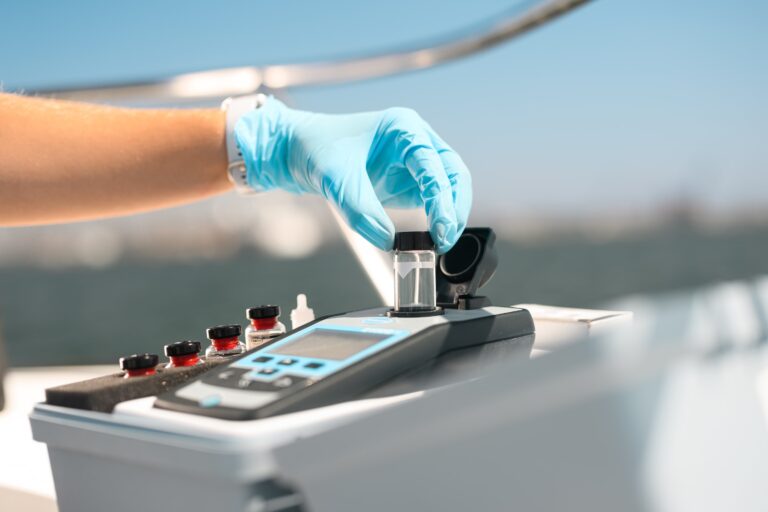
SAN DIEGO, Calif. – San Diego Coastkeeper published its 2025 San Diego Bay Water Quality Monitoring Report, marking the first full year of data collection across the Bay. The findings paint an encouraging picture: bacteria and nutrient levels remained low, while potentially harmful metals like copper, lead and zinc were not detected at any of the sites. Coastkeeper collected samples bimonthly at four locations, ranging from the Pepper Park boat ramp to Coronado Island public beaches. Samples are analyzed at a private certified laboratory and the data is shared with the public, primarily through an interactive data map at www.sdcoastkeeper.org/san-diego-bay-map. The data was shared with the Port of San Diego and U.S. Navy planners to inform the next 10 year natural resource management plan for the Bay, which will be completed in 2027.
Key Findings
- Bacteria levels remained consistently low across all monitoring sites in San Diego Bay
- Nitrogen and phosphorus stayed below water quality objectives 100% of the time, though both were still frequently detected, especially during the wet season.
- Copper, lead, and zinc were not detected at any site for the entire monitoring period.
“Coastkeeper’s data shows that baseline water quality in San Diego Bay is very good, welcome news for a waterway that has been heavily impacted by industrial and military uses for decades,” said Phillip Musegaas, Executive Director of Coastkeeper. “But we can’t claim victory just yet; stormwater pollution and emerging toxins like PFAS “forever chemicals” continue to impact the Bay, and require us to redouble our efforts to reduce pollution, restore critical bay wildlife habitats and realize a vision of a clean, healthy San Diego Bay for future generations.”
Program Achievements
Coastkeeper’s San Diego Bay program reached several milestones in 2025:
- Bimonthly sampling events that brought in partner organizations and community groups to join our community science work
- Exploratory sampling for PFAS and HF183, a marker of human sewage, both of which were found in the Bay and require further action (Separate reports pending)
- Regular Boat patrols and Marine Protected Area (MPA) Watch outings aboard Clean Sweep, Coastkeeper’s patrol vessel
- Kayak based trash cleanups and water quality demonstrations with Ocean Connectors, our nonprofit youth education partners on the Bay.
Future Actions
Coastkeeper will continue its current Bay monitoring program through 2026, in order to build a strong 2 year dataset of ambient water quality that will inform future management of the Bay. In 2027 we will transition to focus on monitoring during and after rain events, when stormwater runoff has the biggest impact on Bay water quality. The report also calls for:
- Ensure that the updated 10 year Integrated Natural Resource Management Plan for the Bay has clear goals for protecting water quality, increasing acreage of key wildlife habitats, protecting Green sea turtles and other key marine species, and increasing resilience to sea level rise.
- Ensure that any new commercial development of the Bay waterfront, particularly the Pangaea and TopGolf projects, complies with the Public Trust doctrine, maintains or expands equitable public access and avoids impacts to the Bay.
- Secure new public funding for the City of San Diego’s stormwater system to address a $6 billion deficit that has left the system near collapse.
The full 2025 San Diego Bay Water Quality Monitoring Report and the interactive data map are available at www.sdcoastkeeper.org/san-diego-bay-map.
About Coastkeeper
Founded in 1995, San Diego Coastkeeper safeguards our region’s inland and coastal waters through a strategic blend of community science, education, grassroots outreach, policy advocacy, and legal enforcement of environmental laws. This approach allows us to effectively tackle the most pressing water issues facing our region. For more information, visit sdcoastkeeper.org.