

By Patrick McDonough, Senior Staff Attorney & Nicky Rosenberg, Communications Manager
Something tiny is hiding in San Diego’s sand, washing into our lagoons, and working its way up the food chain. It arrives by freight train, escapes by the billions, and has been polluting our most protected coastal habitats for decades with almost no oversight. It’s called a nurdle, and we’re doing something about it.
What Is A Nurdle?
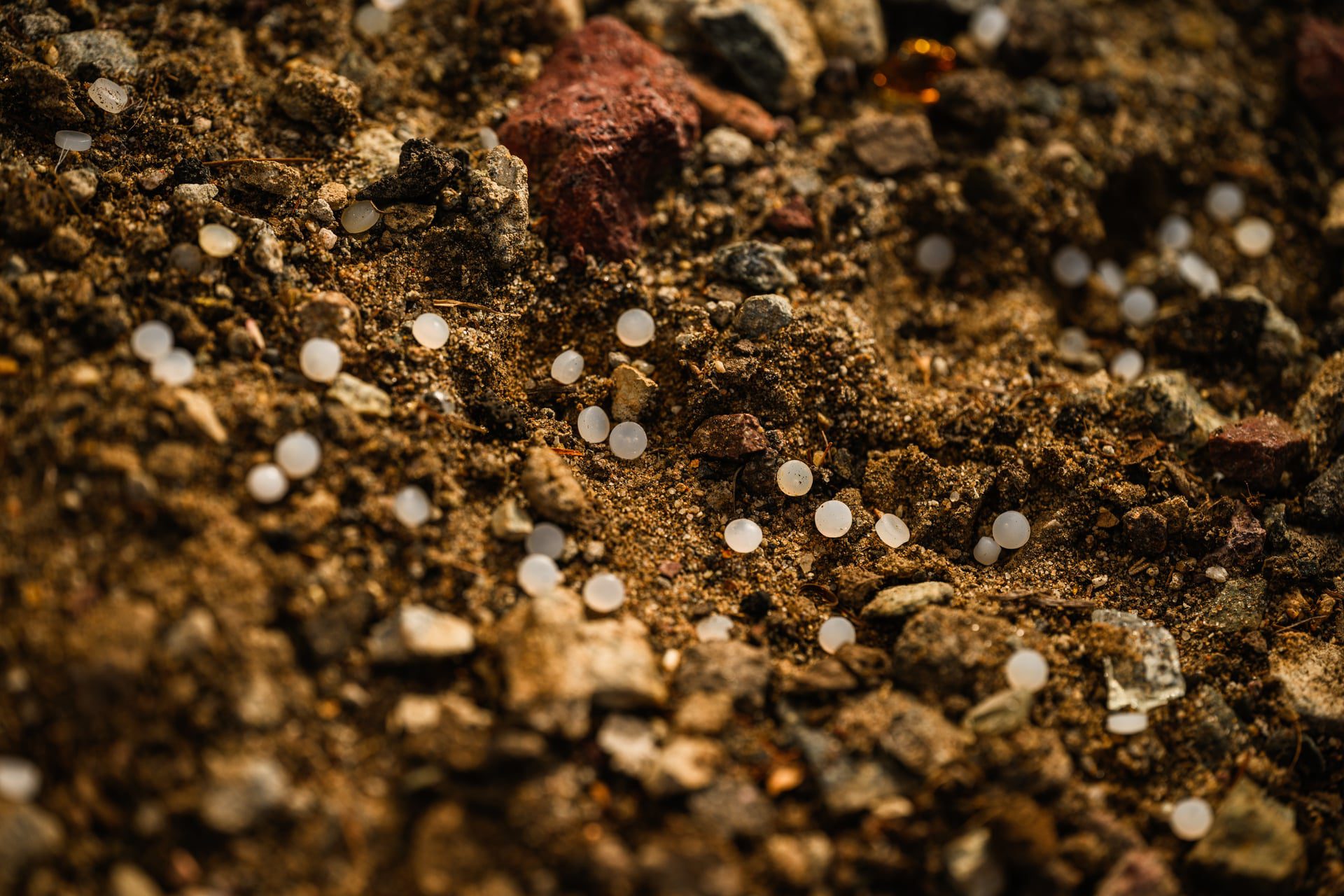
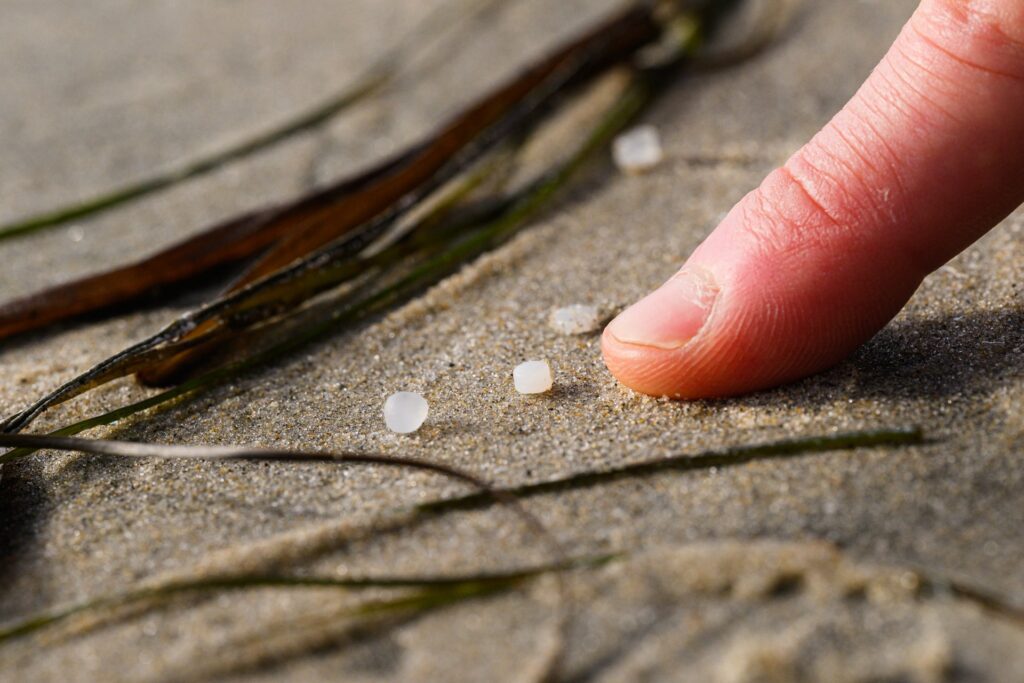
Nurdles are tiny pre-production plastic pellets, roughly the size of a lentil or fish egg (1–5 mm). They’re the raw material used to manufacture virtually every plastic product in existence. Water bottles, food packaging, car parts, toys: it all starts as a nurdle.
Nurdles are produced in massive quantities — the U.S. alone manufactures approximately 27 million tonnes annually. As plastic is sourced from fossil fuels, the explosion in natural gas fracking in the U.S. has led to a boom in plastic production. Nurdles are then shipped by rail, truck, and cargo ship to factories around the world where they’re melted down and molded into consumer products. And at nearly every step of that journey, they escape.
Tiny Pellets, Massive Consequences
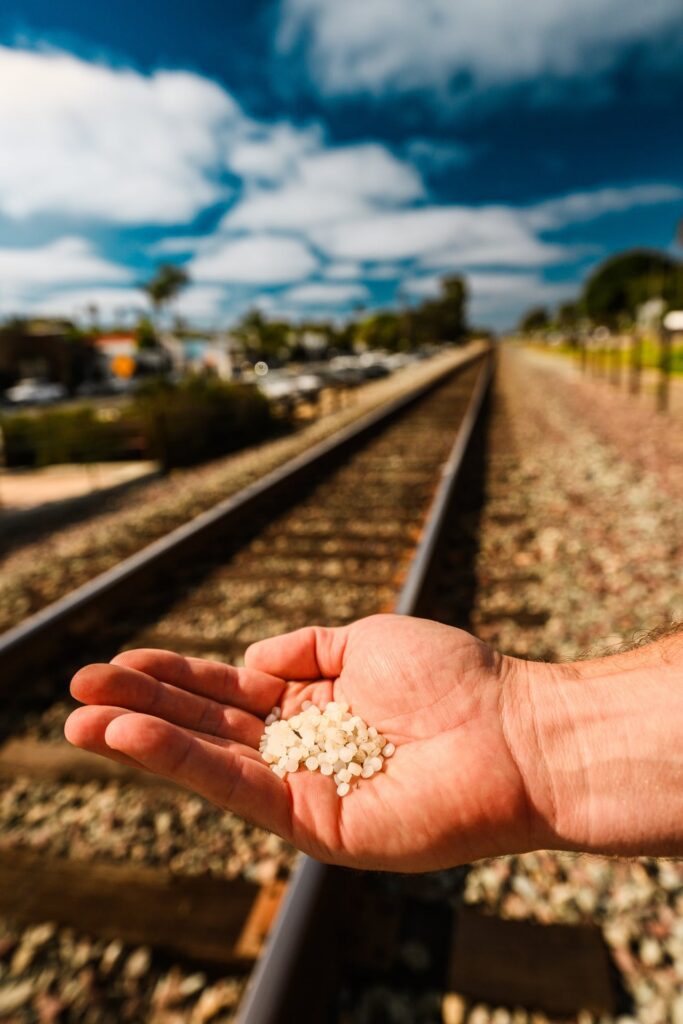
Nurdles are notoriously difficult to contain due to their small size. They leak from hoses during factory loading, seep from rail hopper cars in transit, fall overboard from cargo ships, and blow in the wind. Once loose, they wash into storm drains, rivers, and the ocean. Researchers have found nurdles lining the sides of freight rail tracks across the country, a visible trail of a largely invisible problem.
The scale is staggering: an estimated 230,000 tonnes of nurdles enter the world’s oceans every year, roughly 25–30 billion pellets every single day. Once nurdles escape into the environment, their small size makes them nearly impossible to clean up. The damage nurdles cause is far-reaching.
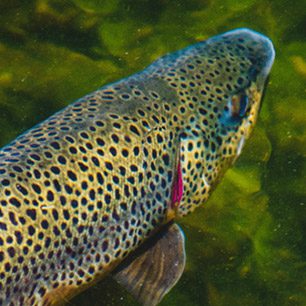
- Wildlife: Because nurdles look like fish eggs, sea turtles, fish, and seabirds often mistake them for food. As these animals cannot digest plastic, ingestion causes digestive blockages, starvation, and death. Scientists have documented plastic’s harmful impacts on at least 663 marine species, and plastics biomagnify up the food chain, eventually reaching humans.
- Toxic contamination: Nurdles act as chemical sponges, absorbing pollutants like PCBs, DDT, and mercury from surrounding seawater at concentrations up to one million times higher than in the water itself. When animals eat nurdles, those toxins move up the food chain. Microplastics have now been detected in human blood, lungs, liver, placenta, and brain tissue.
- Lasting pollution: Under UV exposure and wave action, nurdles break down into microplastics and nanoplastics that persist in the environment for hundreds of years, absorbing and releasing toxic chemicals as they slowly degrade.
Despite all of this, nurdles enjoy numerous regulatory loopholes. They are not explicitly considered a pollutant under the Clean Water Act, and no federal agency is specifically responsible for nurdle spill prevention, and until recently, there were no mandatory standards for how they’re transported.
From Train Tracks to Tidal Lagoons
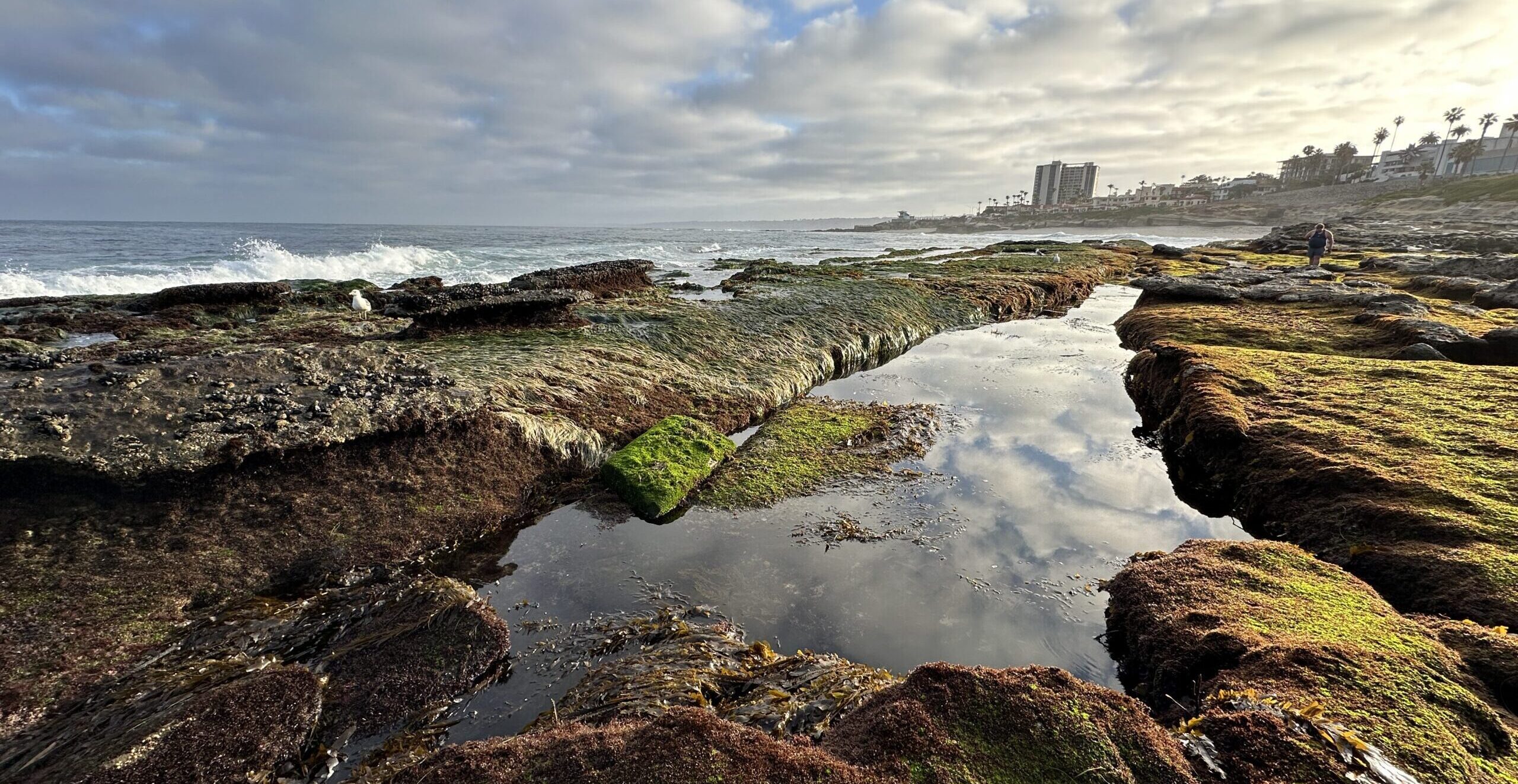
San Diego’s coastal rail corridor runs the length of the county, hugging the coastline and crossing every major lagoon and coastal wetland along the way. BNSF Railway freight trains carry plastic pellets in hopper cars along these tracks, and they’ve been leaking into NCTD’s stormwater system, which transport them directly into our lagoons and onto our beaches.
San Diego Coastkeeper, the Coastal Environmental Rights Foundation (CERF), and our partners at Trash4Tokens have documented nurdle contamination routinely along the train tracks throughout north county, indicating persistent leaks and spills throughout the north/south rail corridor and in San Diego’s wetlands. Dynamic waterbodies adjacent to the ocean, these tidal wetlands encompass an extraordinary range of habitats of critical importance.
Those lagoons — Buena Vista, Agua Hedionda, Batiquitos, San Elijo, San Dieguito, and Los Peñasquitos — are California State Ecological Reserves. They filter pollution from urban runoff, buffer our coastline from storms, provide habitat for birds, fish, and invertebrates, sequester carbon, and offer irreplaceable spaces for recreation and connection with nature. Tragically, California has already lost more than 95% of its original coastal wetlands. These six lagoons represent a precious fraction of what remains, and they’ve been absorbing plastic pellet pollution for years.
What We’re Doing About It
In April 2024, San Diego Coastkeeper and CERF filed a Clean Water Act legal action against BNSF Railway and NCTD for plastic pellet pollution of our coastal lagoons. Our case argued that BNSF’s leaking hopper cars constituted an unpermitted discharge of pollutants under the Clean Water Act.
This month, that fight resulted in a landmark resolution. BNSF Railway, NCTD, CERF, and San Diego Coastkeeper announced an agreement establishing industry-leading national standards for plastic pellet transport by rail:
- Mandatory sealing of both loaded and empty rail cars carrying plastic pellets
- Service refusal and escalating fees for non-compliant cars — the first economic enforcement mechanism of its kind
- A monitoring program to verify compliance along the San Diego rail corridor
- Financial support for San Diego County plastic pollution efforts
- Nationwide rollout across BNSF’s entire network, with work underway to develop industry-wide best practices through the Association of American Railroads
How You Can Help
Spread the word. You now know what a nurdle is — and that matters.. Tell your friends, family, and colleagues. Public education is a critical first step in addressing the global plastics crisis.
Report when you see nurdles. If you spot nurdles on the beach or near train tracks, document and report them at Nurdle Patrol, a global database for tracking plastic pellet pollution. Never go onto active train tracks — observe and document from a safe distance.
Join a beach cleanup. San Diego Coastkeeper hosts regular community waterway cleanups. Check our events calendar for upcoming opportunities near you.
Purchase a mermaid tear catcher. Our partners at Trash4tokens created this frisbee you can use to sift through sand to find nurdles.
Support policy change. Rep. Mike Levin (CA-49th) has re-introduced the Plastic Pellet Free Waters Act, which would direct the EPA to prohibit pellet discharges into U.S. waterways. Contact your federal representatives to push for its passage.
