







By Patrick McDonough, Senior Staff Attorney at San Diego Coastkeeper (Edits by Port of San Diego)
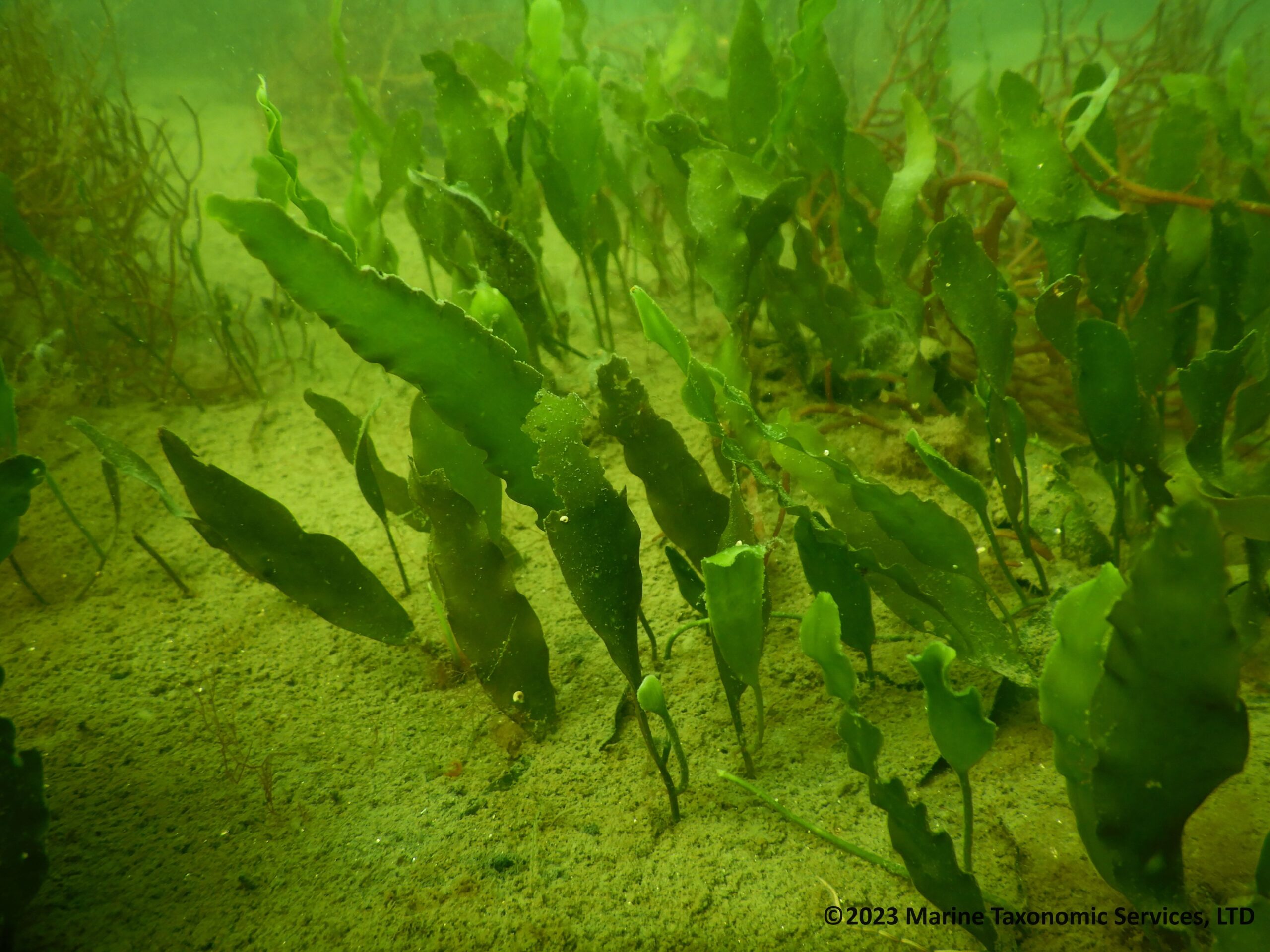
In September 2023, a highly invasive seaweed called Caulerpa prolifera was discovered in San Diego Bay near the Coronado Cays. This outbreak is a major concern because it threatens the ecologically vital eelgrass beds within the San Diego Bay National Wildlife Refuge. Left untreated in other parts of the world, invasive Caulerpa has spread rapidly, displaced native vegetation, and devastated local ecosystems.
Caulerpa is recognized for its rapid growth and ability to outcompete native marine vegetation. Caulerpa is native to Florida and other subtropical and tropical marine environments. No Caulerpa species are native to California. It grows easily in tanks and is commonly used in home aquariums. However, Caulerpa is illegal to sell, possess, transport, or release in the state of California under Assembly Bill 655, passed in 2024.
Once introduced into a natural coastal environment, Caulerpa can grow over an inch per day and survive up to 10 days out of the water. It can sprout new colonies from fragments smaller than a centimeter long, which are easily spread via ocean currents, tides, or human activities. Due to the extensive damage this invasive species has caused globally, and the high costs associated with managing it, even minor outbreaks can spread quickly and cause major concern.
Importance of Eelgrass
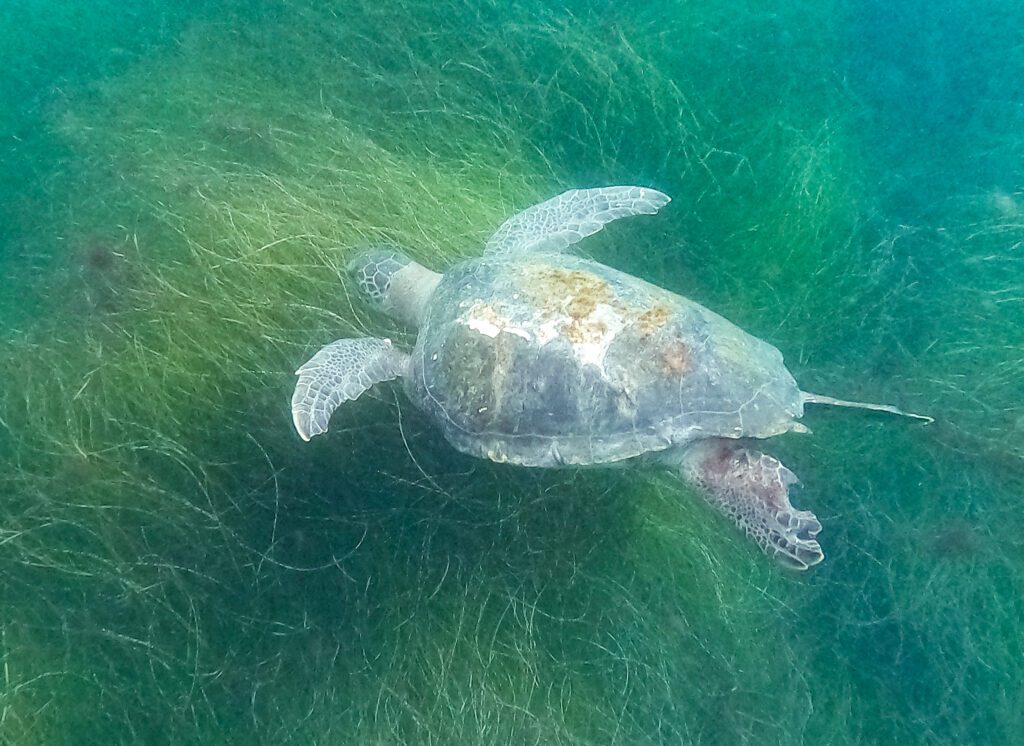
The importance of the eelgrass beds in San Diego Bay cannot be overstated. San Diego Bay has nearly 2,600 acres of eelgrass. That’s 50% of all the eelgrass in Southern California and about 17% of all eelgrass in the state. Eelgrass habitat ranks among the most productive habitats in the ocean and is an important component of the entire coastal food web. It provides a number of important ecosystem functions including spawning surfaces for fish, foraging areas and shelter to numerous species of young fish and invertebrates, food for migratory waterfowl, and the home and food source for the Bay’s native green sea turtle population. It also provides sediment stabilization, wave dampening, carbon cycling, nutrient uptake, and habitat structure. Due to these multiple benefits, eelgrass beds serve as a critical indicator of overall ecosystem health. When eelgrass is healthy and thriving, the bay’s fish, birds, invertebrates, and the public all benefit.
Response & costs
Due to the severity of the threat posed by Caulerpa, multiple agencies are providing significant resources to contain, manage, and eradicate the outbreak. Since its discovery in San Diego Bay, a network of federal, state, and local agencies are working to investigate and minimize the extent of the infestation. The Southern California Caulerpa Action Team (SCCAT), which consists of many agencies including the Regional Water Quality Control Board, State Water Resources Control Board, California Coastal Commission, California State Lands Commission, NOAA’s National Marine Fisheries Service, U.S. Fish and Wildlife Service, U.S. Army Corps of Engineers, California Department of Fish and Wildlife, California State Parks, and the Port of San Diego (Port), are working together and advising on eradication efforts.
The Port issued a local emergency proclamation in November 2023, which remains in effect. This emergency designation assists the Port and other agencies in securing funds to monitor and treat Caulerpa. However, due to the need for trained SCUBA divers to find and treat Caulerpa patches, eradication efforts are time-consuming and expensive. Dive teams continue to survey for new Caulerpa patches and monitor treated patches. All known patches in the bay have been treated with benthic barriers, which are opaque tarps that block sunlight and reduce water flow, which smothers the Caulerpa and contains it under the barriers to prevent further spread. Salt has also been added under the barriers to accelerate Caulerpa mortality. However, these areas require routine monitoring, and divers continue to find small hot spots in and around the National Wildlife Refuge. Agencies have already exhausted hundreds of thousands of dollars in emergency funding, and the total cost of the monitoring and management efforts thus far is estimated to exceed $3 million.
Lessons from past Caulerpa outbreaks
Unfortunately, this is not California’s first face off with Caulerpa. In 2000, an outbreak of a similarly invasive Caulerpa species (Caulerpa taxifolia) was detected in two Southern California lagoons, which included Carlsbad’s Agua Hedionda Lagoon. The successful eradication took six years at a cost of more than $7 million. Due to the prompt response and inter-agency coordination, the eradication led to the recovery of important eelgrass habitat and helped to protect California’s sensitive, but vital, lagoon habitats. The challenges and lessons learned from this experience highlight the urgency of addressing the current Caulerpa prolifera invasion.
Law banning Caulerpa
Due to the serious environmental damage posed by Caulerpa, California enacted a statewide ban (Assembly Bill 655) on all Caulerpa species beginning January 1, 2024. The City of San Diego also has an ordinance (San Diego Municipal Code § 63.1502) banning the possession, sale, and transport of all Caulerpa species within city limits. The SCCAT has also worked with online retailers including Amazon, Etsy, and eBay to prevent online sales of Caulerpa shipping to California addresses. While these new legal measures provide major protections to curb the spread, the threat of Caulerpa still lingers, as investigations have revealed that some stores still illegally sell Caulerpa, and Caulerpa has been purchased online and shipped into the state directly to consumers.
How you can help
Public awareness and involvement are crucial in combating this invasive species.
Aquarium owners must be educated about the dangers of Caulerpa and the importance of proper disposal practices. Do not purchase Caulerpa and do not dump aquarium contents into natural water bodies or storm drains. The proper method for removal according to California Department of Fish and Wildlife, is to freeze it for at least 48 hours and throw it away with your landfill trash.
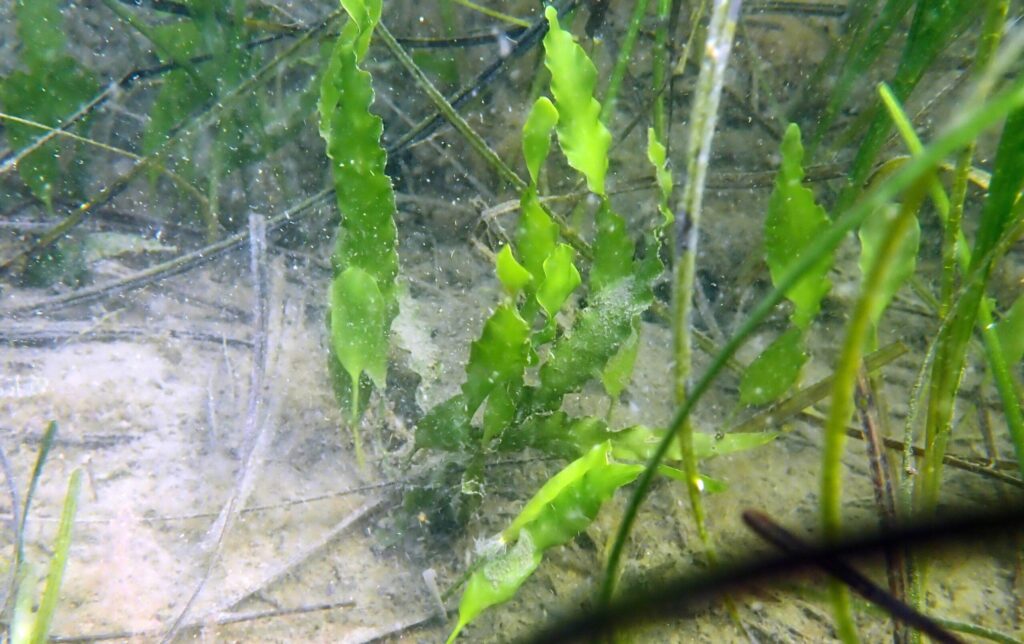
Boaters, kayakers, beachgoers and divers can help by avoiding areas known to be infested with Caulerpa and reporting any sightings to the California Department of Fish and Wildlife immediately. Learning to recognize this invasive algae is an essential step in preventing its spread.
Join us in this critical fight against invasive species. Stay informed, practice responsible aquarium ownership, and report any sightings of Caulerpa prolifera. Sightings of a Caulerpa species should be immediately reported to the California Department of Fish & Wildlife at 415-740-9869 ([email protected]), or NOAA Fisheries at 562-980-4037 ([email protected]). Together, we can safeguard our precious water resources.