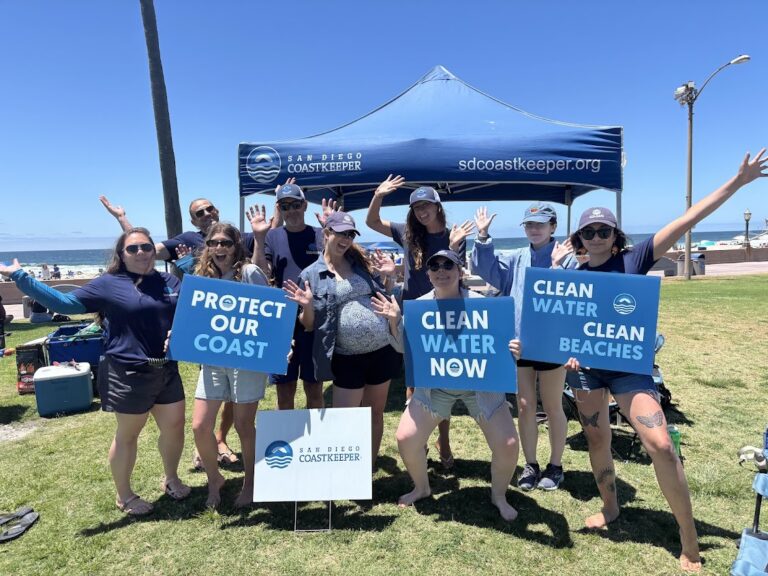
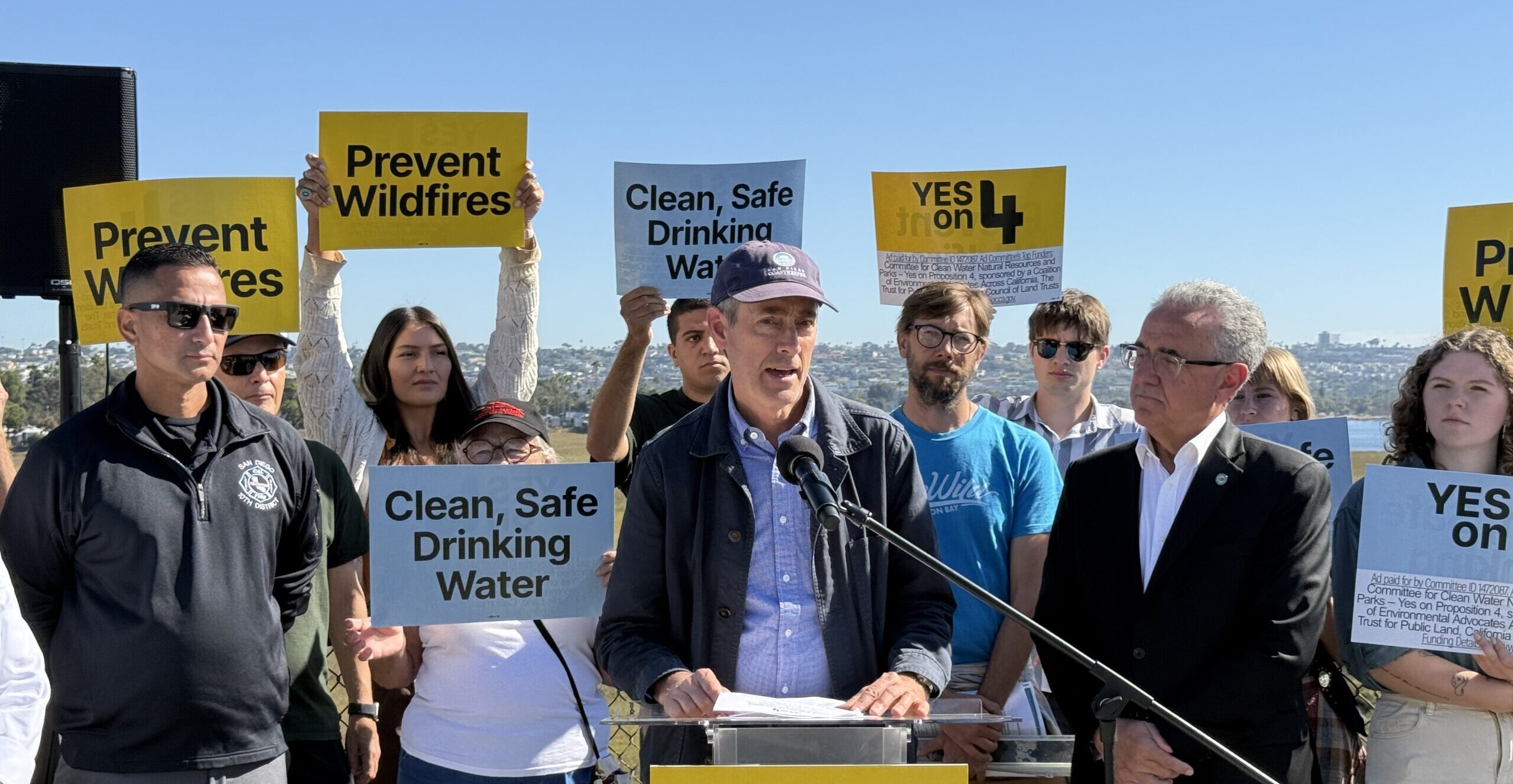


Left to right: Natalie Herendeen (Monterey Waterkeeper), Drevet Hunt (California Coastkeeper Alliance), Erina Kwon (Los Angeles Waterkeeper), Patrick McDonough & Courtney Brown (San Diego Coastkeeper)
By Elyse Farwell, Education Manager at San Diego Coastkeeper
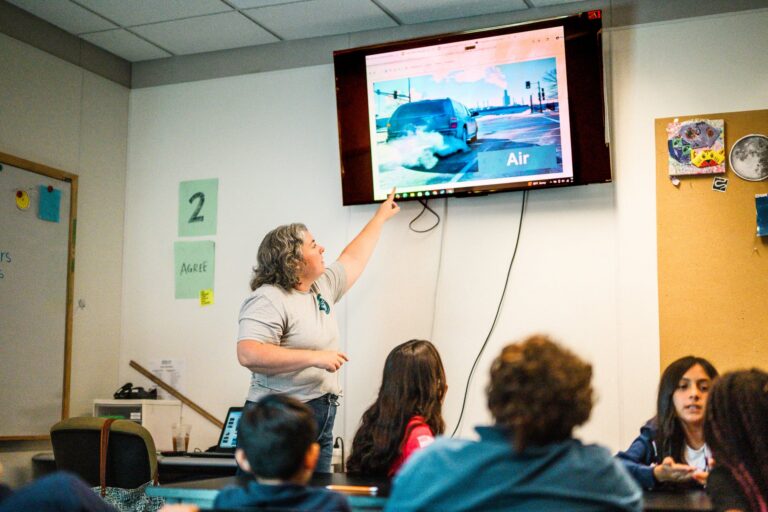
Image shows Elyse teaching at the Elementary Institute of Science
This fall has been an incredibly active season for San Diego Coastkeeper’s education team, with nearly 300 students across San Diego County engaging in hands-on lessons about water systems, pollution, and environmental stewardship.
Elementary Programs: Building Early Connections
The season began with continued support for the Elementary Institute of Science’s Steps2STEM program, where 4th and 5th graders explored marine debris, watershed systems, and how water moves through our region. Students participated in simulations and interactive activities, and made art to share their learning and messages about keeping our oceans clean. These elementary engagements continued throughout September and October, expanding to additional classes on Fridays and strengthening Coastkeeper’s early education outreach.
Middle School Partnerships: From Classroom to Kendall-Frost
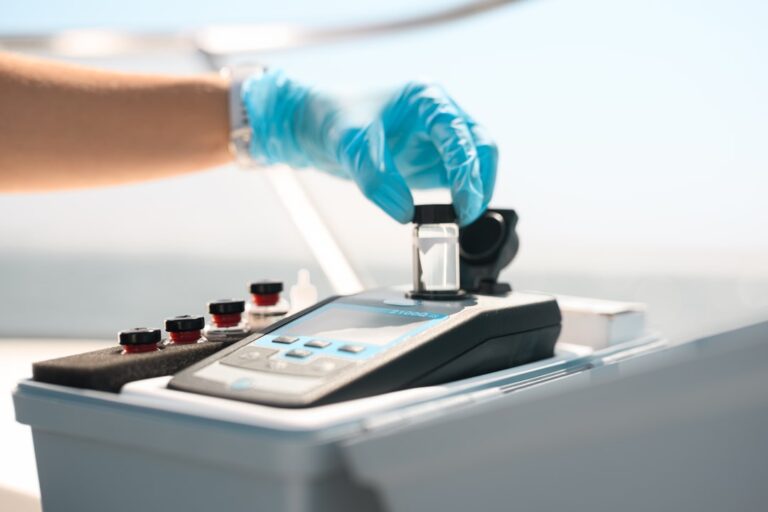
Much of the fall was also dedicated to a large-scale middle school partnership with Longfellow TK–8 Spanish Magnet School. This collaborative, multi-week unit—designed alongside two science teachers and supported by partners at the San Diego Bird Alliance—served nearly 200 students from 6th through 8th grade. Throughout the series, students examined the history and industrialization of Mission Bay, the impacts of stormwater runoff, and the binational challenges of the Tijuana River Sewage Crisis. They learned to measure and interpret scientific indicators such as temperature, pH, dissolved oxygen, phosphates, nitrates, salinity, and turbidity, connecting these metrics to ecosystem health, wildlife resilience, and community wellbeing.

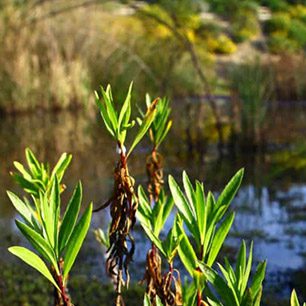
The centerpiece of the program was a three-day field experience at Kendall-Frost Marsh Reserve, where students rotated between water quality testing stations, wetland restoration activities, and bird population surveys. Coastkeeper staff, Bird Alliance educators, and partners—including Think Blue Associate Planner Cassie Smith—supported students as they explored Mission Bay’s natural habitats and saw firsthand how restoration efforts protect water quality. After returning to the classroom, students analyzed data and are in the process of creating stewardship action projects aimed at sharing what they learned with their peers and communities.

High School Projects: Investigating Our Watersheds
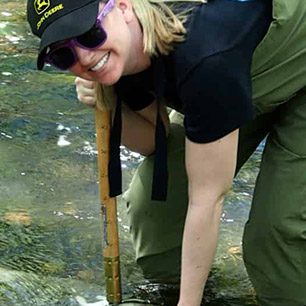
High school students also participated in Coastkeeper’s Science to Stewardship programming this season through a five-part series with High Tech High Media Arts juniors, which is embedded within their interdisciplinary San Diego History and Ecology Project. The first three sessions introduced students to the relationships between pollution, urbanization, climate impacts, and environmental justice, grounding their learning in the lived realities of San Diego’s watersheds—including the effects of development, the Tijuana River crisis, and the ecological dynamics of San Diego Bay. Students practiced Coastkeeper’s water quality monitoring methods and carried these skills into a full field investigation at the bay, where they collected and tested water samples on site.
The upcoming fourth session will guide students through deeper data interpretation as they analyze their water quality results alongside broader ecological observations to identify trends, assess watershed health, and connect human activity to environmental change. The series will culminate in a public exhibition as part of the schoolwide Book of the Land showcase, where each watershed team will present a large-scale, immersive visual narrative synthesizing their historical research, ecological surveys, and predictive models. Their exhibition pieces will illustrate the past, present, and possible futures of all of San Diego’s eleven watersheds, incorporating maps, data visualizations, narrative excerpts, and student-designed solutions—and students will serve as docents, guiding visitors through their findings and engaging the community in conversations about stewardship and sustainable futures.
The Power of Experiential Education
Together, these fall engagements highlight the power of experiential education to deepen students’ connection to their local environment. By blending science, community partnership, and place- and project-based learning, Coastkeeper’s education programs continue to empower young people across San Diego to understand, protect, and advocate for clean, healthy waterways.